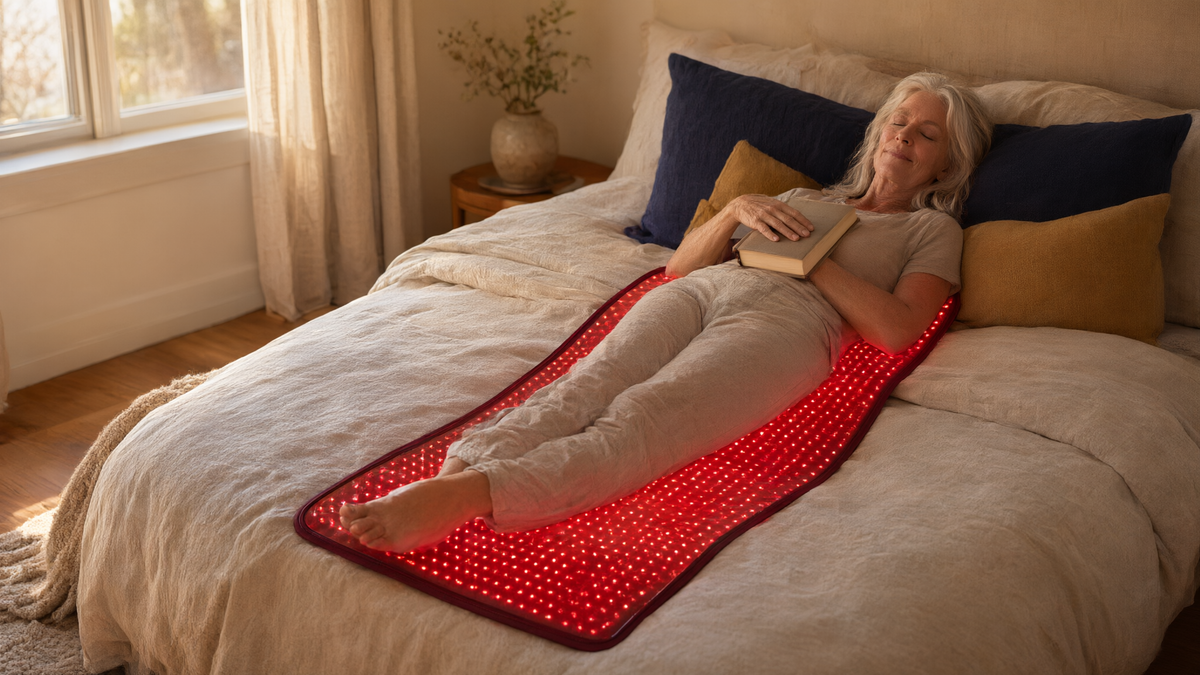
A woman lying full length on a glowing red light mat on her bed at golden hour
Learn

Red light therapy, explained

Red light therapy, also called photobiomodulation, uses red and near-infrared light. The light is absorbed in the body's tissues, and research suggests it interacts with the mitochondria, the energy-producing structures inside cells. Red light works near the surface; near-infrared travels deeper. Source: de Freitas and Hamblin, IEEE J Sel Top Quantum Electron, 2016.

This page answers the questions people ask most, with sources. Where the research is early, we say so.

What's the difference between red and near-infrared light?

Red light, around 620 to 700 nm, is visible and works at surface tissue: skin, collagen and circulation. Near-infrared, around 800 to 1,100 nm, is invisible to the eye and travels further, reaching muscle and deeper tissue. That is why a device mixing the two looks partly dark while it is fully on.

Why 660 nm and 850 nm?

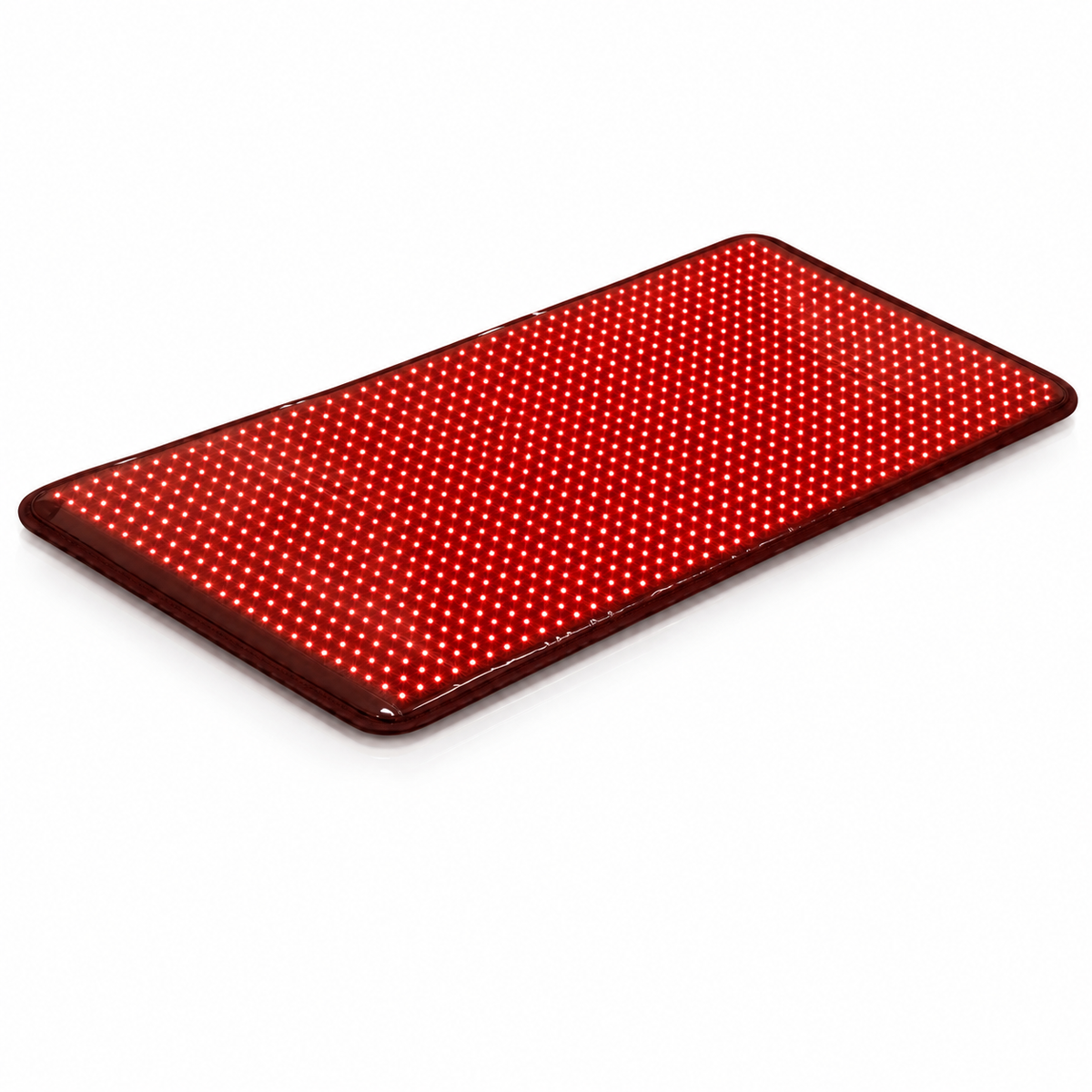
They are two of the most studied wavelengths in photobiomodulation research, and every LED on the Red Light+ Mat carries both. The Face Mask adds blue light at 410 and 460 nm for the surface of the skin, and Solomon's Crown adds 1070 nm, the deepest band in our system. Each device is its own tool, not a bigger or smaller version of another.

What does "irradiance at a distance" mean, and why should you ask?

Irradiance is how strong the light is where it lands, in milliwatts per square centimeter. A 2026 peer-reviewed product guide reports typical irradiance for skin-focused applications of 20 to 60 mW/cm², and advises checking a brand's numbers rather than trusting them. Source: Spongberg et al., Cureus, 2026.

Ask two questions of any device: at what distance was it measured, and with what instrument? A number quoted at zero inches, or from a cheap meter, can flatter a device. We will publish our own measured figures with the distance and the instrument, not before.

How long and how often?

More is not better. Research describes a biphasic dose response: too little light does little, and too much can reduce the benefit. Source: Huang et al., Dose Response, 2009.

That is why every Exodus device comes with a time, a schedule and a limit, and why those limits are not interchangeable between devices. The Safety page has the full table.

What does the research show, and what does it not?

Photobiomodulation has been studied for decades and the published research is growing. Most of it concerns red and near-infrared light in general, often with specific clinical devices and settings, not any one consumer brand.

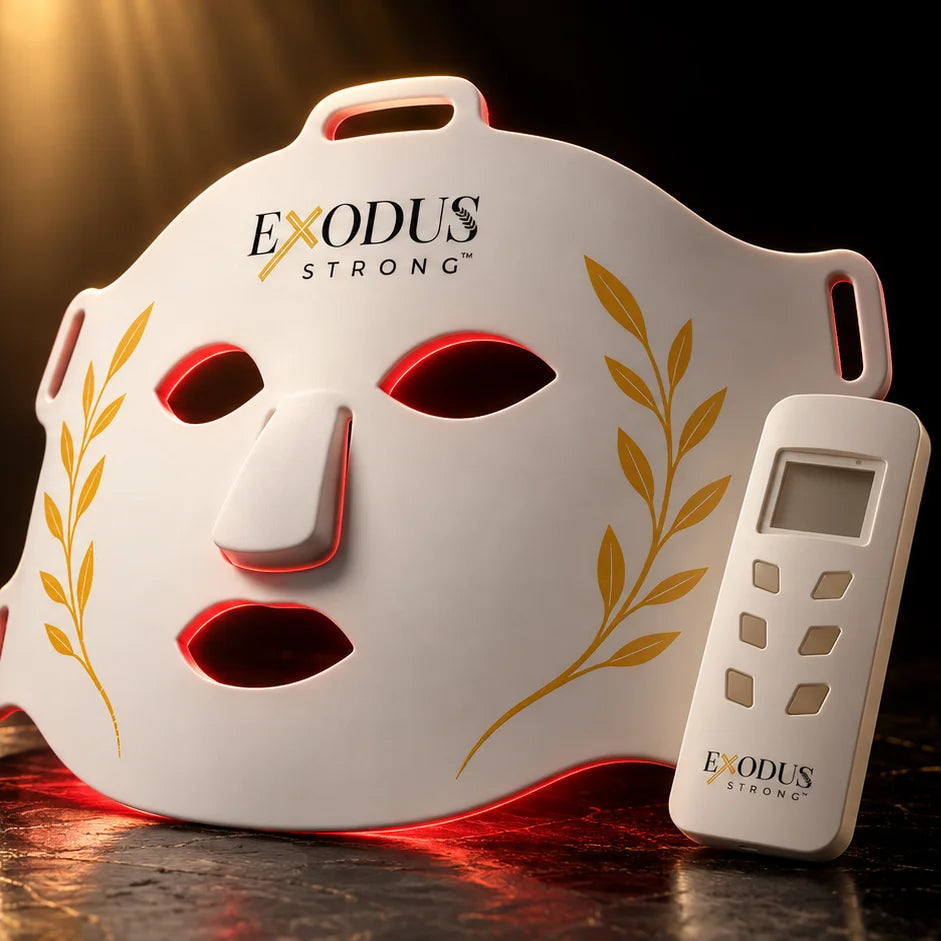
We have not run clinical trials on our devices, and we do not claim results we have not measured. The one exception on our site is the Red Light+ Face Mask, which is FDA-cleared (K243978) for the treatment of full-face wrinkles and mild to moderate acne on the face.

Who should talk to a doctor first?

Anyone who is pregnant, has a pacemaker or other implanted device, takes photosensitizing medication or retinoids, or has a light-sensitive condition. Our devices are for adults. See the Safety page for each device.

The science, in under a minute each

Why it works, in five short videos

Five explainers, each under 45 seconds, each line traced to a published source. The transcript sits under every video.

Why it works, 44 seconds

The Depth Dive

How far red and near-infrared light travel into the skin, and why.

Transcript. Not all light travels the same distance into your skin. Here is skin in cross section. Epidermis, dermis, fat, and muscle beneath. Blue light is absorbed near the surface. Red travels further, into the dermis. Near-infrared, around eight hundred and fifty nanometers, travels furthest, into tissue beneath the skin. Why? Blood and pigment absorb shorter wavelengths. Water absorbs longer ones. In between sits an optical window. Every beam fades gradually as it goes. Red reaches into the skin. Near-infrared reaches beneath it.

Why it works, 44 seconds

The Cell Engine

What research suggests the light does inside a cell: the mitochondria, cytochrome c oxidase, ATP.

Transcript. Follow red and near-infrared light into the skin. Into a cell. Into a mitochondrion, the cell's power plant. On its inner membrane sits an enzyme called cytochrome c oxidase. Research suggests this is where the light is absorbed. One proposed idea: the light frees the enzyme from nitric oxide, so oxygen can bind and respiration picks up. In cell and animal studies, the cell's energy currency, ATP, rises. It's the leading explanation, not the whole story, and it's still being studied. Light in. Cellular energy out.

Why it works, 40 seconds

The Dose Curve

Why every Exodus manual sets a session time: the biphasic dose response.

Transcript. How much red light is the right amount? In lab research, the effect follows a curve. Dose is plain arithmetic. Intensity, multiplied by time. Too little, and there's no measurable response. As time adds up, the response climbs to a sweet spot. Keep going past it, and the response shrinks, and can even disappear. Distance changes the dose too, so follow your manual's placement. That's why every Exodus manual sets a session time. More is not better. Right is better.

Why it works, 44 seconds

Seen and Unseen

Why near-infrared LEDs look dim or dark, and why that is normal.

Transcript. Some LEDs on your device look dim? Here's why. Your eyes are most sensitive to yellow-green. Past deep red, sensitivity falls away fast. Red at six sixty nanometers looks bright. Near-infrared at eight fifty shows only a faint red glow. The ten seventy in Solomon's Crown looks dark. Watt for watt, eight thirty looks about a hundred thirty-five thousand times dimmer than six sixty. Your eyes barely see near-infrared, but it is there. About half of sunlight's energy is infrared. Dim near-infrared LEDs are normal. They're working.

Why it works, 44 seconds

The Spectrum Map

Every wavelength in the Exodus devices, on one spectrum, and what each one is for.

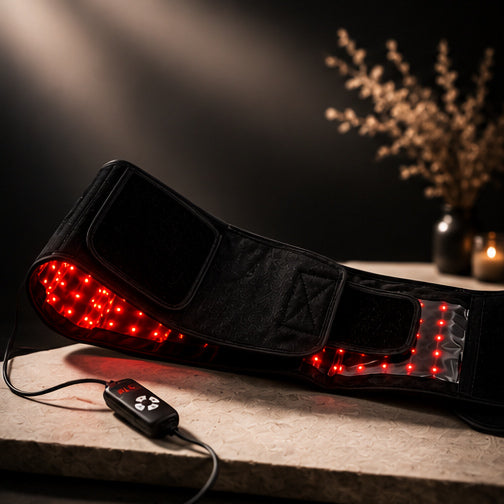
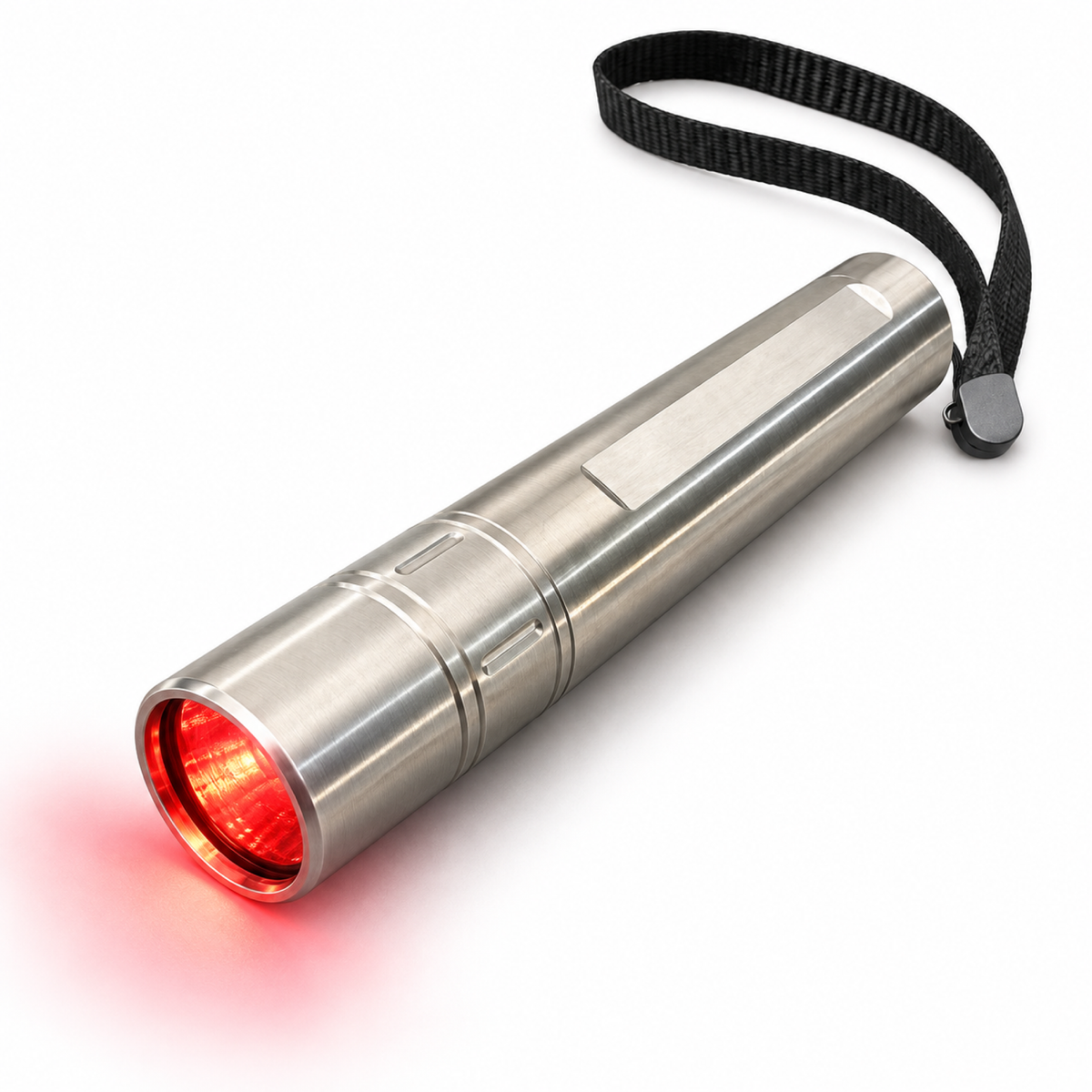
Transcript. Every Exodus device is built on specific wavelengths. Here is the map. The face mask carries eight, from four hundred ten to eight hundred eighty nanometers. The mat and Belt Plus share two: six sixty red, and eight fifty near-infrared. The wand pairs visible red with eight fifty. Solomon's Crown adds ten seventy. No other device has it. Past about seven fifty, your eyes barely detect the light. Red and near-infrared slip through a natural optical window. One spectrum. Every wavelength placed with purpose.

Where to start

The whole body

The Total Body Reset: the mat, the card, the Prayer Guide and a 30-day plan.

See the kit
A woman lying full length on a red light mat in her living room

Your face

The FDA-cleared Red Light+ Face Mask and the ritual around it.

See the mask
A woman in a reading chair wearing the Red Light+ Face Mask with tea

One area

The Belt+ and the Red Light Wand, for one spot.

See the options
A woman wearing the Belt+ at a garden window with a watering can

Safety first

Every session limit and who should check with a doctor first.

Read the safety page
An open Bible, a mug of tea and a sprig of olive in warm red light

From the blog

06 July, 2026

How to Use Red Light Therapy at Home: A Step-by-Step Protocol

Read more about How to Use Red Light Therapy at Home: A Step-by-Step Protocol

09 July, 2026

Home Red Light Therapy: The Complete Beginner's Guide

Home red light therapy uses 660nm and 850nm light devices you own and use yourself, typically 10-20 minutes per session,...

Read more about Home Red Light Therapy: The Complete Beginner's Guide

03 July, 2026

Red Light Therapy for Skin: What 660nm Light Does at the Cellular Level

Red light therapy supports skin by delivering 660nm red light into the upper 1-2mm of the dermis, where it stimulates...

Read more about Red Light Therapy for Skin: What 660nm Light Does at the Cellular Level
Professional headshot of Rob from Exodus Strong in a blue pinstripe suit.
Why this exists

Built by a founder who needed it first

Five near-death experiences and a Stage III melanoma diagnosis taught me one thing I couldn't unlearn: the body is designed to restore itself when you give it the right conditions. I'm 58 and healthier than I was at 44. Everything we sell, I use. If it isn't right for you, call us and we'll make it right.

Rak Chazak. Rob Rene, Founder